Not “So Many Projects”

I’ve come to a very unsettling conclusion about what other people think about single feminine living. Don’t get me wrong: I’m used to blowing people’s minds out of their tight little boxes without trying. But yet another person said to me yesterday, “You have so many projects!” And I thought to myself, What a hypocrite.

There seems to be this misunderstanding that only married or partnered home owners can have projects without them being “many.” That yard upkeep or relandscaping, home improvements, home organization, and crafting hobbies (welding, fixing, painting, writing, sewing, quilting) are only to be expected if you’re “settled” enough to own a home and solo-pay bills, yet “too much” for a single apartment-dwelling woman. That by doing these same projects, I am intimidating. I am doing too much. I am doing more than is to be expected. I am overreaching. I just need to ditch some projects. I’ll be happier that way.

What they fail to realize is I am “settled” in an apartment. That I can pay my own bills without a roommate. That I don’t need a roommate or a partner to feel secure or to somehow be a grown person. That if I don’t do home organization and maintenance, I won’t have a nice place to live. That I’m knitting or no-hem taping discounted cushion covers or sewing jewelry pouches or coloring surplus shelves with a gifted half-can of stain, because I don’t want to spend the $100+ they did to not have to do any work. Because I want to have my dream library room without spending $2,000 per shelf. Because I don’t want to sit around doing nothing like they do and call it “fun.”

I realize people mean well. Their box is all they know, all they’ve ever desired since they forgot what it was like to want more. They don’t know what it’s like to live within their means while getting “outlandish” things that they want. There isn’t a slot in their head for traveling internationally for the same price they just spent on their giant-screen smart TV or their new car.

But can we please wake up and realize that just because someone does more than you, doesn’t mean they’re over the top?

I picked my projects because I liked them. Because they were doable. Because they fit my personality. Because they improved my quality of life in the long run. Because I knew that 20 minutes or an hour here or there could get it done. They are not any less than what you’re doing trying to start your own online e-commerce business or installing IKEA kitchen cabinets, nor are they any more remarkable. They simply are.

You do yours, and I’ll do mine. And later, perhaps, when you want advice on leatherworking or clothing alteration, and I want advice on how not to kill my plants, we can exchange notes.

RWA Thoughts from a Person of Color in a Whitewashed World

After a few years’ absence from RWA due to academic pursuits, I am shocked and disappointed to return to Twitter to see RWA in such an upheaval. What happened to conflict resolution? Instead, so many people have decided that resigning is the answer. Ironically, to endorse diversity, they are lessening the diversity of RWA by leaving, thinking that will solve the conflict. As both a person of color and a trained mediator, this kind of resolution seems ridiculous. So many emotion-driven decisions are flooding the media right now. What will happen to everyone when all the dust settles? How is RWA supposed to rebuild in a new image, when people keep leaving? Where is the collaboration?

It seems to me that the safest place for race in publishing is no place. That is to say, no description of a character’s appearance is going to be politically correct in all regards, and when race is addressed, the most true-to-historical-perspective depictions of race are going to be derogatory–which could get really bad really fast. The only “safety” is to not talk about it, which does not help people heal from the hundreds of years of racial oppression against minority cultures.

Where do we go from here? Shelving books in African American and Native American sections in Barnes & Noble when I worked there did strike me the wrong way–enough that I questioned another co-worker why we even had such sections. They replied by way of sympathy to minority groups, wanting to make culturally relevant books more findable; clearly my co-worker had no ill intentions by agreeing with the categorization. But what was corporate thinking? It seemed like a risky move for them to endorse. I certainly didn’t want to show anyone to a section with their race or ethnicity as its official label. Rosa Parks wasn’t that long ago.

One of the reasons why negative treatment of women, enslavement, and corrupt politics show up in my writing is because it’s frightening how difficult they are to address, and the wounds go deep in every culture. Being the slave, being the oppressed–how do you reconcile that with how things are supposed to be? How do you build a utopia, when people can never forget, even if they forgive?

I don’t think cussing out another writer or torching someone on social media is the answer. I also don’t think white fiction is wrong, or in any danger of going away. There are chauvinists, there are racists, but to look for these in every white person (like you need to screen them) is to stereotype them just as we (people of color) have been stereotyped. I don’t mind reading a story full of white people. I also don’t mind sitting through stereotypes, if I sense the author or speaker is going to swing an interesting curve ball my way. I might hurl if every African American or Latina literary character is described as having “mocha” skin. But that doesn’t mean I can’t get past the mocha to see the story beneath. It just means that your heroine should probably drink a mocha every day, for word-choice irony. 🙂

I think we forget sometimes that writing is built on stereotypes. They’re called tropes. What we do with the trope, the stigma, the conflict of interest, is what matters. We’re authors. We transform what is bad into something good, or at least into a guess at forward progress for humanity. Even if it’s messy. Especially if it’s messy.

It’s always messy.
RWA Annual Conference Experience 2016

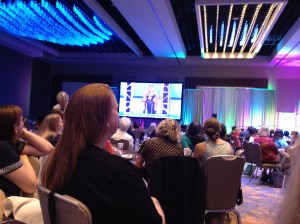
IMG_3840I just returned from the RWA Annual Writing Conference in San Diego, California! 5 days surrounded by writers of all levels, from aspiring to multi-published, and half of them pitching to agents and editors! The Marriott Marquis (connected to the ever-famous Convention Center) was awash with 2,000 authors toting their lime green-handled Swag Shop bags from ballroom to ballroom. On Day One, before Orientation was even a line in my schedule, I joined baffled forces with Contemporary Golden Heart Finalist Rayn Ellis. Together we ran into Romantic Suspense Finalist and previous Golden Heart Winner Diana Belchase…right before we spotted Nora Roberts passing by into the harbor!

And, again, that was Day One. First Timer Orientation wasn’t even until Day Two. Workshops, keynote speaker sessions, and publisher spotlights didn’t start until Day Three.

Yes, when I say publisher “spotlights,” I mean the editors from the major Romance publishers were actually there, detailing their publication lines, telling us what they were looking for, answering questions, and even hosting book signings and free giveaways. Which was totally separate from meeting with authors to hear them pitch their stories in person, to determine whether they wanted to read the manuscripts.

IMG_3843There was so much going on at that conference at any given time! Every hour meant a choice between 5-10 workshops, spotlights, book signings, or author panel “chats.” Chats were individualized to cover each sub-genre of Romance, and workshops ranged from author/publishing/marketing career decisions to structure, wording, and focus of the story itself. For three days, from 8:30am to 5:30pm, I tried to absorb as much as I could from as wide a variety of workshops as possible, sometimes even workshop-hopping because there was more than one workshop per hour from which to glean. Kindle representatives were there, Nook representatives were there… It was insane.
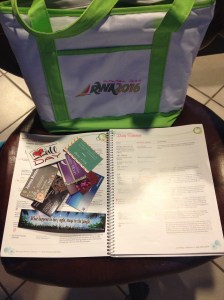
Author insanity, in the best of ways.

There was a distinct moment when I realized that one of the authors on my current workshop panel was Elizabeth Hoyt—as in, the Historical Romance author of at least one of the books I downloaded onto my Nook when I was binge-reading Beauty and the Beast stories. And she was right there, in front of me, on a panel answering questions about writing intimate scenes! 😱 Imagine my shock!

There was another moment when I realized my workshop instructor was Sarah MacLean, whose books I had actually shelved in Barnes & Noble. (You come to remember some of those big names, when they take up that much room on the shelf.)

Yes, you should wish you had been there. So, attend next year!

Special shout-outs to Brea Vinagh and Jen, my fellow first-time conference buddies! And a shout-out to Stephanie Garber as well, who encouraged me to attend events like this. Her first YA Fantasy novel, Caraval, will be released next year! Dare I say I knew her beforehand? She has been a splendid trove of advice for me, and I wish her all the best on her launch in January 2017!


IMG_3875The sheer number of people I met at the RWA conference who asked me if I had a critique partner (CP) alerted me to how badly I need one at this point in the game. I originally joined FictionPress because I was so hungry for feedback. Writing is a solo endeavor, and constructive reviewers are hard to come by—particularly for the non-YA Fantasy-Romance sub-genre (which is distinctly different from Paranormal Romance). I just joined the Fantasy, Futuristic, & Paranormal Chapter of RWA. I am also reactivating my membership in Janice Hardy‘s Critique Connections group. So, if you are interested in being a beta reader or a critique partner for my story, please let me know! I am very interested in how I can better my story, better represent my characters, and ultimately succeed in publication.

Thank you for your continued support! Story progress will be ramping back up shortly. You have Brea to thank for that. 😉

Worst Romance Reader Ever

It’s official: I must be the WORST Romance reader EVER!!!

I love Romance. I even welcome some of the nitty-gritty TMI stuff. So why is it that the last e-book sample I read, written by a respected romance author, prompted me to make gagging noises and chuck my Nook across the room?

In the writing community, everybody is always talking about HEAs (Happily Ever Afters). And when I come across samples like I just read, it all sounds so suave—even when it’s the detached prodigal son watching a prostitute leave his bed. Bad Boy, okay yeah, I can dig that. But don’t romanticize him. Give me all his rough edges. Let his roughness come across in the writing. Let me feel him. Not feel what “good girls” want him to be underneath from the get-go. I want him to be raw. I want him to be work to get through to.

The last thing I want to do is bash on fellow writers. Indeed, these people have massive followings, so they must be doing something right.

Or everybody is just used to their favorites.

I, for one, have been spoiled off the cultured, individualized character perspectives of fantasy novels (Teen/YA and otherwise) and manga, down to the things certain characters notice and the language they use—language which often grows and changes through the course of the book, as the character himself grows and changes. So when I start in on a stereotypical Romance novel, and everything reads across in the same smooth monotone, I start to skim. And skim. Until I realize: I’m going to be skimming through this whole book. And then I grunt and groan and flail and flop, because I thought I finally had that book that I was going to read all the way through, and enjoy—that one I’d stay up all night to finish. And instead, I got one I would have set back on the bookstore shelf.

Somehow, I’ve gone from my childhood habit of reading every book that I can get my hands on in my subject of interest, to garage-selling books I don’t like and rarely finishing any books at all.

They say that writers should read widely in their genre of choice. And that’s a nice idea. BUT what happens when you throw those “wide reads” across the room—repeatedly? What happens when that becomes the reason why you keep writing the unpublished manuscript you cart around from coffee shop to coffee shop?

At this point, I just want a good read. A good romance read, with fantasy elements, if at all possible. Something I wouldn’t push “snooze” through. It doesn’t have to be spectacular…just, not uniform. Not post-apocalyptic. Not exclusively science fiction. With realistic, non-sappy, non-bratty, non-stereotypical fictional characters. I mean, come on, this is the romance section, people! It shouldn’t be this hard to sell me on the male character. He doesn’t have to be a werewolf or a vampire. In fact, I’d prefer if he’s not. He just has to be special.

If you’ve read an adult romance-fantasy story that you absolutely fell in love with, feel free to leave a comment below and give it a shout-out! I don’t care if it has mature content, but I DO care if the sex is pointless; character development through sex is an art form. The story doesn’t have to have sex though, just decent romance with fantasy. So GO! List away! PLEASE! I’m dying of suaveness overdose and bad storytelling styles.

Workshop Help: Information vs. Perspective

I recently realized I hadn’t updated my Volume 1 info page. Whoops. Fixed that.

As I mentioned before, I’ve been dragging my heels in my writing a bit because I signed up for some online writing workshops.

“Do those really help?”

Yes and no. There’s always the stuff you already know from experience, the stuff you’ve already researched, and the stuff you can’t figure out how to assimilate. The farther along you are in your writing, the more narrowed your focus. For instance, I now know that I am writing an antihero (as opposed to a Prince Charming or an epic hero), and my Fantasy story’s plot decided it wants to be a Romance. So every time I read advice about what a hero should and shouldn’t have, and what they should and shouldn’t do, I’m seeing it through a Romance/Antihero lens. I take some things, and I toss the rest. What to take vs. what to toss is the pivotal question. My male counterpart is an Antihero, he’s discreetly muscled and slimly built, and I loathe irrelevant book covers, so I automatically dismiss the idea of having a book cover image depicting a headless muscly chest, and I’m going to ignore any advice on how to make him extra-fluffy lovable. On the other hand, he’s damaged with a past, I want readers to be sympathetic, and I’ve got to get my heroine (and my readers) to fall for him. So I’m more than happy to take advice about how to write in his sexy quirks every couple lines, and build questions and intrigue through his actions and reactions.

Information is what is helpful in these workshops. It’s authors handing you tools. It’s social connections. And it’s awareness of your contemporaries and the current book market.

Perspective is a totally different issue. The best perspective help I’ve had volunteered actually comes from readers in the genre, down to the subgenre and the sub-subgenre. There’s no substitute for it. Readers intrinsically know what they’re looking for in a subgenre—or rather, they can tell whether what they’re looking for is or isn’t present. Some readers will just drift away if they feel your story is lacking. But other readers will leave a line or two—or even a few paragraphs—if they know you’re interested in what they have to say.

So I’d like to say “thank you” to those readers who reviewed my most recent chapter, and those who have reviewed my story in the past. Also, a special “thank you” to those readers who reviewed multiple versions of my story. It is your comments I keep in mind when I revise, and when I try to figure out where to write to next. It is your comments that I use to write myself out of corners. And your comments have helped make me a better writer. Don’t think that your one little nay-saying comment is not heard inside a bunch of yay’s, or vice versa. I know I have cut scenes some of you liked, but don’t think I’ve deleted them. They’re still here, waiting to be added back in.

That being said, I am slowly realizing that all of my focus on the “right” ways to do things in order to get published has both helped and stunted my writing. I’ve been outlining and re-outlining, trying to figure out where to go next. That’s necessary, at certain stages. But I’m looking at two more events before the end of the second book, and realizing my writing went so much faster when I just free-wrote. Sure, I wrote myself into a bunch of corners. Sure, I had a bunch of adverbs and repetitive sentence structures. But I also chalked scenes full of emotion and used them as catalysts for unexpected plot turns…and I did it without hardly thinking about it. I just followed my pen. The next revision I have in mind for my manuscript is actually way closer to my original plot ideas, because my story has taken on a life of its own and thus far I have opted to blindly follow it, into whatever unexpected turmoil my pen may lead. I’m not sure which is better to publish: the original plot, or the raw, character-charged emotional turns of events. But with the end of the second book finally taking shape, I think I might just throw myself into it. After all, that’s where all the limes are going to hit the fan.

The second event at the end of this book, I was actually considering moving to the end of the first book. But now I’m not so sure. I guess I’ll figure it out after it’s written. After all, no matter which order events fall in for these two books, events in the next portion of the story should progress the same.

I don’t know if I will go right into writing and posting the next book after I finish Book 2. I might, if I have momentum. But it seems like a great breaking point for revisions.

Anyway, I’m finishing up a Male P.O.V. workshop by Sascha Illyvich (previously entitled “Inside the Male Mind”). I’m starting in on a Romance Writers of America workshop called “Killer Openings” by Alexa Bourne, which should help with the revisions I’ve been toying with for the beginning of my series. I’m also attending a one-night class on publishing and a seminar about characters this month. After those, my two-month workshop madness will be complete. It’s quite the marathon, and it can be difficult to switch back and forth between question mode, social mode, revision mode, and writing mode. Who knew authors had to be such multi-taskers? But after that, it should slow down…and my writing should pick back up. Theoretically.

Chapter 12 is underway; don’t think I’ve forgotten about it just ’cause I’m in a workshop frenzy. I’ve spent a lot of time mulling it over, attempting outlines, and brainstorming specific prospective scenes. I’m being careful, because recent discussions about bondage and alphas has helped me see how important it is that I handle the details of Lord Alonza’s party the right way. Rome may be dominant, but it is very important that you (my dear readers) see that his brand of dominance distinguishes itself that of the corrupt nobility—that they’re about a lot of things that he’s not. I believe the best way to do that is to stick Rome in a noble-dominant situation, and contrast his desires (and how he handles them) within the same situation.

I should warn you, though: Some bad crap is going to happen to Labriella. And, Sheryl, you’re right; Labriella has been growing more timid. But, if I play my cards right, the aftermath of said “bad crap” is going to change that. 😉

So stay tuned!

New Adult Resources Wanted

There are sooooo many people posting writing tips on the internet. So how is it that I cannot find the advice that I actually need?

How to get an idea for a story is not my problem; I have plenty of ideas that pop into my head all the time.

Struggling to reach a 50,000-word count is not my problem. The first book in my current series is at 200,000 words! PLEASE don’t encourage me to multiply my words or tell me how to lengthen my story! I want to know what to condense, what to cut, and what to move to the next book.

“There are plenty of online resources.”

WHERE IS THE NEW ADULT COMMUNITY?!?!?! Seriously, Young Adult is everywhere. But when it comes to New Adult, all a Google search does is turn up lists of NA books, or YA writing resources. Can somebody please point me to where I can research the NA Romance and Fantasy genres specifically? Or where I can find an NA forum community? Or an NA critique partner? Everyone is promoting publishing for NA. Great! But I’m not there yet! I want stuff to help me get there! I want people to point out what I don’t already see. So where are those people?! The writing community is so big, I don’t understand why this is a problem! There is only one book I have been able to find about writing New Adult fiction, by Deborah Halverson, and I own it, and it’s uber helpful. Am I to believe that this is the only book marketed on the subject?

Alright, I’m done ranting. But this isn’t just a rant; it’s a cry for help. I’m mostly past the my-story-is-my-baby-please-don’t-slaughter-it sentiment; now whenever someone offers constructive criticism on my story I’m ecstatic, because it’s so rare. So if you know of a writing community, or a conference, or a workshop, or something that can help me with writing New Adult Paranormal Romance set in a fantasy world, I would LOVE for you to comment. Blog recommendations, book recommendations, forums…anything.