Poll: What is High Fantasy?

As I continue trying to home newer stories, I’ve been struck by the question: What is high fantasy? Some publishers say it’s any story set in a new world. Others say it implies elves and dwarves. Still others expect swords and magic as weapons. I wonder…what if we wielded ordinary objects that housed magic? Would we be in a high fantasy story? Or do we need royals for that?

Do you think epic fantasy and high fantasy are the same? If not, reply in the comments with the differences.

Updated Release Notes 2024

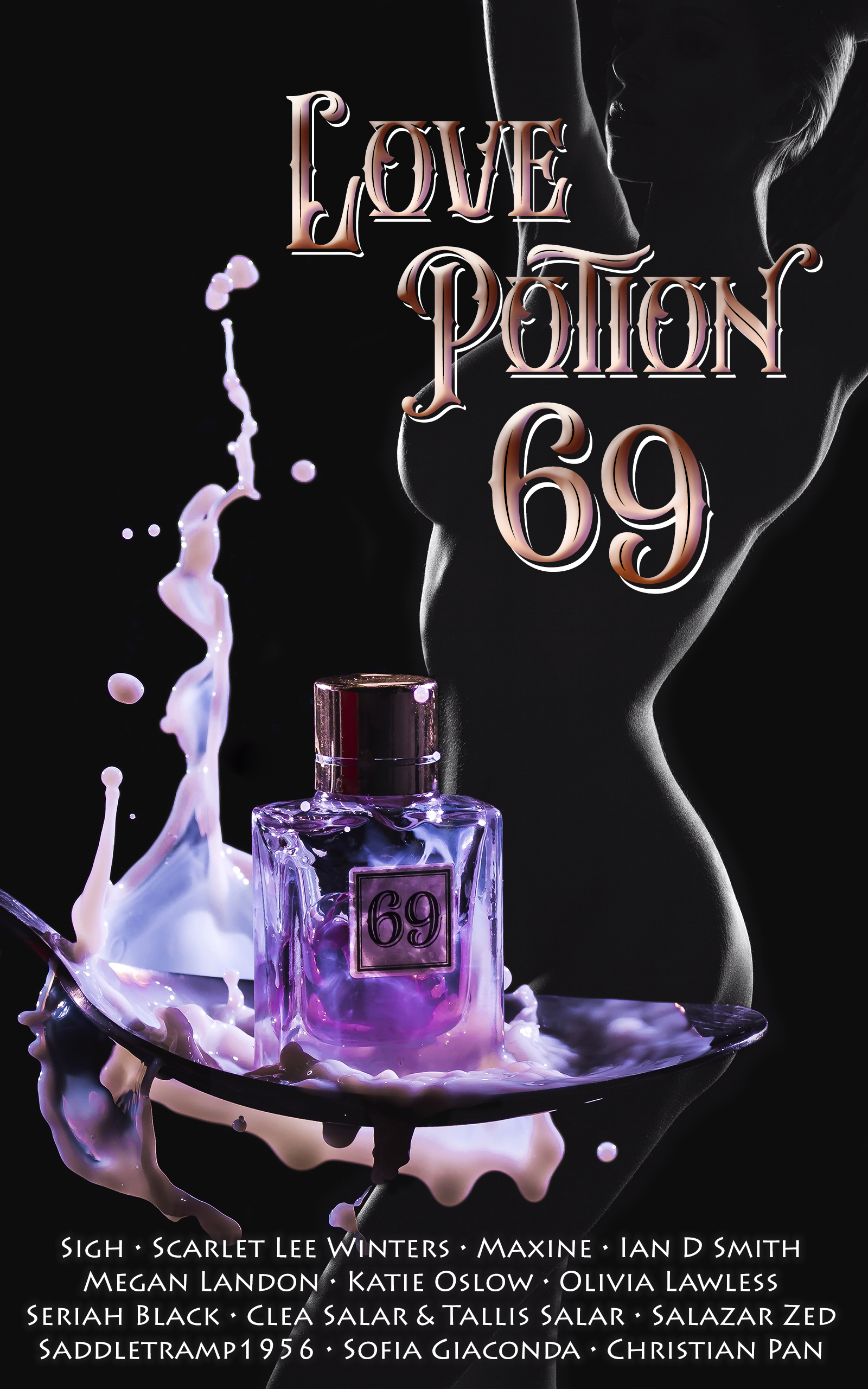
Love Potion Story Released

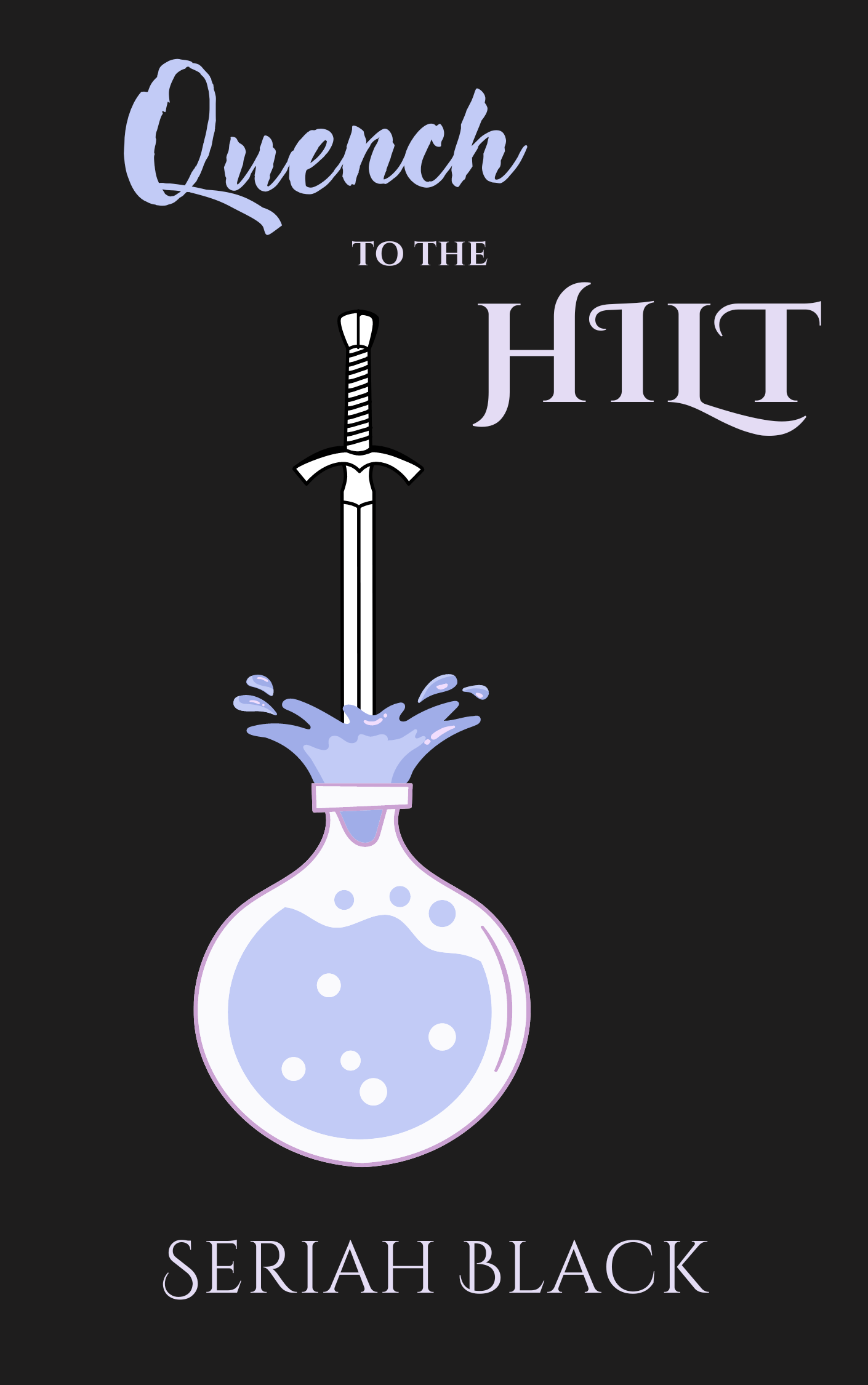
“Quench to the Hilt” is now available to read on Amazon! For a limited time, you can download the anthology it’s in as part of Kindle Unlimited. You have only a couple months left to do so! Otherwise, you’ll need to buy the e-book or order the paperback. I may publish an epilogue later, so make sure you have read it before then!

“Quench to the Hilt” is the last story in the anthology. Go get your blacksmith hippo shifter x dark hero love! Extreme heat awaits.

Dragonfly Story Pushed Back

Originally, this story was going to be contributed to an anthology this year. However, the anthology date has been pushed back past the end of the year, and the dragonfly story continues to evolve. It’s unclear whether this story will grow from novelette into novella length. If it becomes a novella, it may be queried to publishers instead.

Let this Bard and Dragon Rock You

We’ve seen plenty of fire-breathing dragons, but what about dragons of the other elements? Enter Theodyne, a rock dragon hybrid with a stony secret.

Don’t miss that there are two stories in this sequence, coming out back-to-back this fall!

Look for a Countdown to Part 1 at the End of August.

Get Yourself Snowed In

Ready for the sweaty weather to finally cool down? This winter, dig into a different kind of heat in the snowstorm with a yeti shifter. More info to come.

New Releases 2024

I’m excited to share I will be releasing two stories in new worlds with new characters this year (2024).

Brewing News

Photo by Ioann-Mark Kuznietsov on Unsplash

If news here seemed quiet in the last several months, it’s because multiple things are brewing.

1. Increased Writing Community

I joined some really great writing organizations and Discords, including Passionate Ink, an erotica consortium, and San Joaquin Valley Writers. I’m also volunteering at the Fantasy, Futuristic and Paranormal Romance Chapter (FF&P) of RWA to get to know the other members better and learn how not to bore you to death if and when I start a newsletter of my own. Let me know in the comments whether you’d be interested in reading a newsletter from me, and what you hope might be in it.

I’ve been attending a ridiculous number of writing workshops. Most writers with whom I’ve become acquainted say I’m doing to much. I say I’m doing what is necessary to get my stories to you as the best those stories can be.

2. Attempted Poetry

(Not to Be Confused with Attempted Murder…Sort of)

Last year’s AWP conference exposed me to fantasy fiction poetry (vs. prose). I was starstruck. I’d read Beowulf and Ovid’s Metamorphoses, so I’d seen some epic fantasy- and mythology-type poetry before. But I didn’t realize there were poets today writing erotic fantasy mythological poetry like Rebecca Lehmann’s “Nike, Medusa, Jocasta, Split.” A little further reading into some online poetry databases and journals, however, revealed that many didn’t have a non-mythology category for fantasy poetry. Weird, right? Since when was that restricted? A recommended poetry book tried to get me to write about the dishes in my sink instead. No thanks. If I wanted real life, I’d stick my nose outside, not in a book. I’m sure Bre’s dishes are way more interesting than mine.

There was another motivation, too. It’s the one we fantasy writers don’t talk about. There’s this horrible thing that happens when a fantasy writer who’s definitely not a poet tries to write a fantasy prophecy. They pretend to be a poet, but something really lame comes out. I needed that not to be me. Rrohm has too many prophecies surrounding him for them to look like I played with a crossword puzzle and hoped for the best.

So, I attempted poetry. I’m not saying it was particularly good poetry. (My instructor and fellow workshoppers were kind, but I have no delusions of grandeur.) However, some BeastKing Chronicles things and some non-BeastKing things came out, along with the buriable real-life things. I started to wonder if a BeastKing Chronicles fictional poem could make it into a newsletter that I send out. Would that be a terrible idea?

Maybe that depends on how terrible my poetry is.

3. Attempted Short Stories

My short stories are breeding like crazy, and they’re coming out faster than I know where to put them. I was always a one-project person, but now I have many. The good news is they will get to you faster than BeastKing Chronicles, and some of them are running parallel to the BeastKing Chronicles plot about three books in. That’s right, I said three. I know you haven’t seen book 3 yet. At all. It has a guaranteed existence. It’s just in the rugrat stages right now. If you don’t mind a little bit of a spoiler, Kitiora has a story you can read in last year’s Seattle Erotic Art Festival’s literary anthology. The sequel is out on query, along with another non-BeastKing story.

Exciting news: Two other, longer short stories I am working on will be coming out this year for sure. One is an enemies-to-lovers dragonfly- and hummingbird-shifter time travel romance with a sordid castle and a dark, magic mirror. The other is a heroic-reversal love potion story where a blacksmith ropes a hero into doing her side quest and gets a bit more sexual tension than either knows what to do with. They’ll have some of the tones and power plays of BeastKing Chronicles, but are completely new stories in their own worlds. So if you’re interested in BeastKing Chronicles, you may enjoy these stories as well. As always, I’ll be bringing you an antihero to remember and a heat level to make you trip in your socks.

As a caveat, I do also have a few stories rolling out that will not have a heat level at all. You’ll still get all the surly antihero goodness, deep characters, special abilities, and otherworldly adventure. You just won’t feel like you’re getting heatstroke from mating heat. If you’re not sure how that would work based on my writing style, you’ll just have to come see for yourself.

4. A Thing Called a Website

As short stories continue to roll out into the public eye, and as I continue to prep BeastKing Chronicles and Salty, With a Taste of Dragon for querying, I’ll be updating this site to reflect that. One change already is the domain. Next steps will be taking more control over the way images and information on the site are laid out.

Perhaps the most exciting will be the addition of cover designs and/or short story emblems. In an era where stock photos amass, and photo credits and AI-generated images have become major concerns, I think it’s time I updated all the graphics on my website. I am scoping out artists, paying for images I can mutate, and learning the most basic of cover designing techniques. Many of my stories have mature and/or graphic content, and I think it’s very important that the cover images representing those stories stay classy and not the kind I would want to hide if small children were running by or my boss were to find me reading my new purchase in a Barnes & Noble café. I’ve been that person ducking behind shelves in the romance aisle, embarrassed that that dude over there saw me surrounded by poster equivalents of suave shirtless men. I’m not doing that to you, as far as I can help it.

Another exciting development is I’m drawing up new maps for BeastKing Chronicles. Or rather, it’s on my list to do. Say goodbye to the days of maps made in Paint. And feel free to point me in the direction of an ink artist/cartographer who does fantasy maps. I don’t want mine to look like I dropped you into a pixely video game dungeon.

Much like I’m no expert poet, I’m also not a professional web designer or graphic artist, so please bear with me as I navigate image licensures, commissions, and best practices.

As mentioned in yesterday’s post, another potential website update is in blog content. I am considering doing a mini series on uncommonly discussed niche writing tropes and sub-genres.

I am still on X, but I have also recently created social media accounts on BlueSky and Instagram. I will add links once they are properly set up. Many author guest speakers I have encountered over the last year are on BlueSky, and I’m glad to join them. However, it may be best not to expect a whole lot out of me on Insta until I have story trailers or something to share. That may be a while. Until then, all you’ll probably get out of me is DIY home library stuff, and maybe excited anthology cover photo shoots.

Possible Blog Mini Series

I have a perfectly good blog sitting here, so why not put something on it?

Photo by Susan Q Yin on Unsplash

I’m thinking of doing a mini series on writing tropes or sub-genres that have been underrepresented.

What do I mean by that?

Previously, I blogged about how difficult it was to find articles on writing revenge romance. Recently, another writer confided how difficult it is for her to research her niche of cozy fantasy. I replied with how difficult it has been for me to research what type of plot pattern a good mystery needs to have, for my mystery subplot. In addition, there is an entire taboo category of romance and dark romance that gets ignored unless you’re in the right reader Facebook group. Yet, these are obviously categories many readers camp in.

Which would be fine, if we were actually teaching people how to write these things. But who can I approach to teach me how to drop mystery hints when my protagonist is not a self-proclaimed sleuth, or how far is too far in rawness in an erotic romance scene? Who can teach me how to keep readers from hating my antihero who wants revenge on the heroine, when she does not want revenge on him? What about showing and not telling, when showing is graphic, or how to write in rich metaphor without overusing “like” and “as”?

You were going to answer, “Find a how-to writing book or article,” weren’t you. (Or use software to nitpick individual words.)

Except, we have a problem: How-to books these days aren’t even what university teachers are recommending. That’s because they are so general that they rarely help other than making a writer sometimes feel less alone in the process. Which is what writing community is for, by the way. Find a workshop. Find a Discord. Find a local group. Something. Anything. Use an online search engine before you say you can’t.

I have several how-to books on my shelf. The issue isn’t that how-to books exist. The issue is that people describe the same elements and repackage them with a different cover. Plot, dialogue, character, and setting are staples. You cannot promise me YA-specific content, or NA-specific content, and then tell me all the generalized content about stories that I already know, and place a line at the end saying, “You should read books in this category to see what’s the norm.” No. That’s why I bought your book. Tell me what I’m looking for. Tell me something other than how teenagers might call me out for trying to be hip. I live in real life; I’ve already seen that. I’ve been that teen. Tell me how to craft voice when I have a younger character. Don’t chicken out because you’re an adult and you’re winging it.

There is a deficit on our bookshelves and online and on our e-readers. The topics that we very clearly need sensitivity readers for are the topics that I have a 10% chance of getting in a workshop once in two years, and almost no chance of getting anywhere else. DEI is not the only thing that got buried.

If you’re like me, in that hole, trying to research and coming up empty, I can’t give you expert advice.

What I can do is start a blog where I share what actually helps me from my search, as I’m searching. Maybe that will jumpstart your own blocked search. Maybe it will spark someone who actually is an expert in one of these categories to do more than regurgitate how important it is to have a plot, have three sections, and save a cat. Those books have already been written. We need your help with new specifics, please. We need your techniques.

Don’t worry; our writing won’t come out like yours if we’re using your technique. We’ve got our own quirks to apply your techniques to.

We talk about “writers lifts” on social media, but isn’t a true lift when we give each other the tools we’re missing, so the rare manuscript gems that are challenging us the most actually get into readers’ hands?

Since when was the status quo fun to write for books?

Let’s write what needs to be written.

I want to pause and say to the many workshop and webinar instructors and speakers I’ve been sitting under for the past two years, and earlier than that: Thank you. Thank you for taking the time and covering the difficult topics, for providing the one-sentence takeaways that I’d been searching three years to find, for answering a dozen questions in a row, for not turning away our difficult and messy endeavors and our crayon-drawing-equivalents of addressing writing prompts and trying out your techniques. It took me a long time to find workshops like yours, and I recommend them to many other writers. I can’t say they all step up to try to tackle such big ideas, but I hope in the future they will.

Violet: When in Doubt, Stab Him

Violet Made of Thorns (Violet Made of Thorns, #1)Violet Made of Thorns by Gina Chen

My rating: 5 of 5 stars

My Summary:
Violet is a rags-to-famous fortune-telling prophetess who purposely thwarted the crown prince’s death destiny during childhood on the streets to make her own life better. Where that’s gotten her is under the king’s thumb, where she can’t say no and has to lie to the populace for a living for the king’s political gain. She lives under the shadow of a prophecy that the previous occupant of her position gave without explanation. When Violet discovers the answer to the prophecy is ransoming the prince’s stolen life back to the Fates, she can’t decide whether it’s in her best interest. Meanwhile, Prince Cyrus, who is ambiguously uninterested romantically in both women and men, can’t decide whether to throw Violet out on the street, trade her away for another seer, or get under her skirts…or a combination thereof. As the charismatic Cyrus is forced into a Cinderella ball where a blind date set up by his father threatens to overwrite his real destined bride, a witch plots to steer Violet’s visions to create a future where corruption magic reigns supreme. Under threat of a conquest-hungry dying king, fairy forest beasts, and more than one imposter, Violet struggles to understand who she is, what occupational knowledge for her profession has been lost, and whether love can exist without trust.

This is a romantic high fantasy beauty and the beast retelling that takes place entirely within one city. It has just as much a New Adult feel to it as Young Adult, though technically it is upper YA. You don’t have to know anything about the Fates, but I kind of wish I did. I drew heavily on my Fates knowledge from Stephanie Garber’s Caraval series. I would not be surprised, based on the ending, if this book gets a sequel.

My Thoughts:
This is the first book I’ve been able to speed-read and binge-read in a long time, and that’s a compliment. The heroine is snarky, and the prince snarks right back, making for a hate-lust combo that is hard to beat. Definitely squarely in the enemies-to-lovers trope. The roses-forest-wolfbeast combo is inventive, and the main character was classified as a seer and not a witch, except when it was construed that others might have a negative image of her. Considering the recent fads of overloading readers with witchcraft, I was relieved to see magic and threads of fate used in a way that I could enjoy them without being forced into a religious vise.

If you think the snarky characters will suddenly have a change of heart on the meaning of snark, you’re mistaken. I was impressed with the consistency of the characters’ personalities throughout the book without ever making it boring. Even the comic relief characters, like Camilla, never felt like they were there just for the sake of diversity or random humor.

One thing this book did do very well was diversity, without beating me over the head with it. Various elements of world cultures were integrated with the Fantasy in a realistic, believable manner that added to the world rather than distracting from the plot.

Another thing done very well was the narrative language of the book. Concise word-pictures were consistent and everywhere. I was able to read them quickly while still getting the full effects. I marveled at how many ways Chen avoided falling into the kinds of overuse of synonym or sentence structure patterns that plague my writing drafts.

What got confusing was Cyrus’ romantic preferences. I spent the first half of the book thinking he was asexual and only trying to find a bride because the king was pushing him. I had guessed that the heroine had to be an exception somehow, because of the prophecy and because it’s a fairy tale retelling. I was very confused about how he felt about Dante due to a later remark by Cyrus. I suspected he had always liked Violet, but none of that made sense until Cyrus said it himself, which took a really long time and I almost didn’t believe him by then, and then I only sort of bought in because he A) must have been covering up that he liked Violet the entire time he was around her from childhood, and B) still wanted to marry her after she tried to kill him…which was a little weird.

What I have mixed feelings about were the sex scenes. I understand that the age category is YA, which often involves censoring. The feel of the characters and the tone of the book were not lost in these scenes; rather, they hit all the right buttons, and I was super engrossed in reading them. But sometimes, because the language was only allowed to insinuate, I got confused. I thought Cyrus was touching her leg, or her stomach through the clothing, but that was not what was happening at all, and I only realized that because Violet’s reaction was disproportionate to what I had assumed was transpiring. If a younger reader picks up the book, they may not catch that they went all the way (or at least, I think they did; again, purposefully ambiguous due to language structure). But any adult who has read a blatant sex scene will figure it out. Either way, waaaaay better than some of the blackout scenes I’ve seen.

Consensus:
I would highly recommend this book to anyone who loves fairy tale retellings, beauty and the beast and Cinderella in particular, and enemies-to-lovers. If you’re hoping the heroine will turn out to be “a nice girl” and Prince Charming will be non-playboy charming, this isn’t the book for you. But if you enjoy quick wit and quick narrative pacing, and a heroine who has seen the ugly side of the world and is smart and scrappy enough to take nothing at face value, and if you understand that redemption is a long road, this book makes for quite a thrilling read.

If you’re squeamish about blood magic via self-injury, though, maybe think twice.

View all my reviews

Heartless: The Unhinged Fey King and the Gamer

Heartless (Immortal Enemies, #1)Heartless by Gena Showalter

My rating: 3 of 5 stars

My Summary:
Cookie may be dying, but she’s not going to let that stop her from kicking butt at video games. A heart transplant offers Cookie an extension on life, a chance to enjoy living in her dream house. But this fey heart comes with complications. Sucked into the world of the fey to become Kaysar’s revenge pawn against those who imprisoned, tortured, and kept Kaysar from his little sister, Cookie’s new life becomes one dangerous mishap after the other. Kaysar is not a very patient man, but he can’t imagine life without revenge. Soon he can’t imagine life without Cookie either. That’s just fine; he can adjust his plans. Or so he thinks. Kaysar is good at acting to get what he wants, but Cookie doesn’t like being lied to, and she can dish back just as much as she’s served. With abandonment of him on the table like it’s never been with any other woman, Kaysar begins to realize his stake in Cookie’s life might need to be permanent. As Cookie and Kaysar try to feel out what a hot, steamy future together might look like, their aspirations to help each other backfire. Cookie fights for first place in Kaysar’s priority list, but even if she can free him from his revenge cycle, she would be signing up to be Revenge Target #1 instead.

This is an adult High Fantasy Romance fey story, heavy on the spice and, later, heavy on the sex. The plot is the Romance, not the Fantasy.

My Thoughts:
The book starts out in Kaysar’s POV, which is incredibly helpful. DO NOT SKIP THE PROLOGUE!!! Kaysar is more than a little off his rocker, and you need to know why. Yes, I know, it’s long enough to be a chapter. Take it as it is.

Kaysar himself is difficult. His motivations aren’t difficult to understand, but it’s hard to wrap your mind around him, and therefore hard to understand how he should be handled. Kaysar is, in fact, the villain of the book. He has kidnapped and mutilated and stolen and conquered, and he fully intends to continue to do so. Not all of the characters Kaysar is harming fully understand what happened to Kaysar, and while few who do would dispute that what happened to him wasn’t right, that wouldn’t slow his revenge.

The temptation, I think, is to see this as a breeder book. Don’t. It’s set up that way in the beginning, with Kaysar’s revenge goal for the remaining Frostline prince using said prince’s wife, but the real romance is about prioritizing each other and overcoming obstacles. It’s also, interestingly enough, about embracing the darkness inside one another rather than trying to change one another. The book raises an interesting question: Would one man’s wife be a different man’s wife if she had gone through a different set of life experiences, or been rejected more? Should one partner really expect the other to be happy like they “used to” be?

The story is also a really interesting play with organ donor ideas. It’s said that, when someone gets an organ transplant, they may take on the likes or propensities of the organ’s original owner. In this story, the heart transplant literally changes Cookie from the inside out, to the point where she has to rediscover who she is and what she is capable of in her new life.

Consensus:
In terms of narrative voice, Showalter by far outdid herself. I had previously read her Urban Fantasy-set (Paranormal) Romance, Playing with Fire, and while it helped get me into non-wolf shapeshifters, the engagement of the narrative doesn’t even compare. That’s aside from my preference for otherworld Fantasy anyway. This series came recommended to me, but I don’t remember if it was by an MFA teacher or another reader. Yes, it’s a series, but I think the next one might be a little too brutal for me. And that’s saying something.

Why three stars? It’s not the writing. Though pressing some of the romantic points home did get a little redundant, the way those things were said felt fresh and new every time. The mashup between a vengeful dark fey self-made lord antihero and a boyfriend-ditched gamer who loves junk food was perhaps the most original pairing I’ve seen, as well. The sex scenes never got old. I think my real problem, quite honestly, was Kaysar. I was intrigued, but I never fully connected to him. He was vivid, hot, larger than life. But he was so trapped in his childhood, and in childish malice, that I never felt like I’d actually want to bring him home or stay in his castle, even if I could understand why the heroine did. Cookie didn’t really have any adult moves to make up for that. In the end, they got their happy ending, but I wasn’t convinced it would stay that way for long.

In all, it’s a brilliant piece of fiction, and it’s permanently staying on my shelf. Even though they were not my favorite characters of all time, they are dynamic, and you need to find out what happens next. I do recommend it to graphic readers who, like me, are so sick of people setting all their Romance in the real world. The book’s a wild ride, and enough to digest that at times I had to take a break. It’s good to have a book like that sometimes. Do note that there is violence and explicit sex in it, and that it’s not about optimism, before you pick it up.

View all my reviews

Song of the Beast: The Novel that Epic Fantasy Readers Seem Not to Understand

About 6 chapters into reading Carol Berg’s Song of the Beast, I went to add it to my “Currently Reading” list on GoodReads, and got distracted by someone’s 1-star review. There were quite a few 2-star reviews, though that was not the dominant rating. The more of those reviews I read, the more I concluded that people reading this book don’t actually know what they’re reading.

The problem is, I think, that there are Fantasy readers who only read 800-page epics, and they came for battle conflict and the mysterious cover. If they had read the first two pages of the book with objective eyes, they shouldn’t have had any doubt what they were reading. But they wanted to believe that the book would curb to what they expected, so they kept reading, and were sorely disappointed that it didn’t.

Number one complaint by reviewers: This book is so psychological that it makes it slow.

Wake up, people! This book never gave any hint of not having that kind of focus or pacing. If you were looking for an epic, you picked the wrong book. This is about male main character angst, and his spiritual journey that has caused him physical anguish. He’s not just going to snap out of it and liquidate a plot for you. You can’t think of this book like punchline Fantasy or Epic Fantasy. This is dark, psychological, torture Fantasy. This is character development that will err on the side of a Literary Fiction style, if that’s what it takes to get the character across and sympathizable. If you can’t deal with borderline Literary Fiction, and couldn’t deal with that kind of narrative in Berg’s other series, why are you trying again with this book, then blaming the book?!

Other complaint: Unending flashbacks.

Now I can tell you either got waaaaay further into the book than me before you made this statement, or you did not get as far as me. I see no continuous flashbacks where I am, have hit only mini ones so far (and I’m in chapter 6, where he’s not flashing back at all, only playing sleuth), and even skimmed forward for telltale signs of prolonged flashbacks, only to find none. Alternately, what you’re really saying you don’t like is chronology that is too difficult for you, in particular, to follow. Because the narration is so seamless, you were not able to pick up where the main character’s past tense turned into “had been’s” without using explicit “had been” language. That’s fine for you, but don’t go blaming the author for being seamless. I will concede that there are flashbacks and there is a lot of introspection about the past. But even being picky about flashbacks, that’s about all I can concede. Actually, as a writer, I’m in awe of how well flashbacks have been handled without being info dumps.

Other complaint: This is not true to musicianship, and/or the music part is unnecessary.

As a musician, I profusely disagree with you. The purpose of this book is not to read to you every note on the staff, every perfect pitch, and every crescendo that led to a dragon’s lilting wail. If that is what you are here for, I am sorry. Music is written in music language; that is why we learn to read the staff. I don’t know if you’ve ever tried, but it is extraordinarily difficult to articulate to a non-musician the beauty of a countermelody without referencing things on a staff, music theory, etc. As both a classically trained and improv musician, who has performed in formal sitting bands and by-ear in gigs with guitarists who only know how to read chord letters, I’m telling you you’re missing the point. Berg is talking about the effects of the music on the listener, and on the performer.

A fellow musician and I once nicknamed the first movement of a piece “The Mermaid’s Scream,” because it required us to hit such an unnatural pitch that we could not imagine anyone would want to hear it, let alone as the intro the piece, and all of us hitting it together sounded to us like a screaming, flailing mermaid. Is that the technical language of the piece? No. There was a trilling B in the 7th or 8th octave–which, for our instrument, meant forte or piano was irrelevant. But do you care about that, as a non-musician, when I’m telling you that? Or can you better picture you trying to outrun a siren (mermaid) to save your hearing, while your fellow musicians shudder in indignant horror?

The moral of the story is not to let other people delude you into thinking a book is bad just because they are not yet able to slow down long enough to understand it. I added this book to my shelf after reading Dust and Light, another angsty Berg book, and so far I am definitely not disappointed. I was surprised by how much the main character’s dependence on music is a solid vein throughout the piece. But that is what uniquely flavors the storytelling.

Inside of Bre

A growing concern in my mind over the years has been the increasing sense that Labriella, the semi-normal-perspectived main character, is a flat character. Most of that stemmed from having little to no interest in her. In the beginning, turning from a Damsel in Distress into a Damsel with a Kick was the main point of Bre’s origins and tendencies. Basically, she existed to show off Rome, and she was built to want to show off Rome.

But as any of my readers would readily tell you, Rome is not the type of guy to love a dunce just because she was there. Especially when she is the reason he hit rock-bottom for the second time in his long life, Rome would be more prone to kick the girl to the curb definitively than to wishy-wash back and forth with uncontrollable emotion over her exit. The magnitude of this is seen not only in Rome’s dealings with shopkeepers and employees, and with nobles, but also with the nobles’ showcases. A remote attraction to Kitiora can only be true if she has a brain, and the balls to kick him in them.

And yes, if you haven’t noticed, Bre’s concern over that last bit is grounded in reality, not jealous paranoia.

So, what is an author to do with a heroine who exists to be as unobtrusive to and un-hated by female readers as possible?

The first major recognition is that Bre lives in a world outside of my area of expertise. I do have professional ties to the medical world and service experience through prior employment. I know masseuses, nurses, and mushroom hunters. I now live in a wooded area. I grew up in a conservative religious culture. I have a family member who beat cancer post-surgery through homeopathic supplements and dietary changes. I have another family member who made burn cream in her backyard. But what do I really know about binding wounds, tinctures and tonics, poultices, and poisons? What about those “long-lost” apothecary skills? What about herbal remedies that aren’t attached to witchcraft?

Throughout (or despite, or because of) my long college career, I gradually found the opportunity to study some of these things: CPR, Wilderness First Aid, mushrooms and poisons books through inter-library loan and a co-worker, and tonics and tinctures through another co-worker, plus pheromonal experimental study results as they relate to psychology.

Today, I add to that study through a couple preliminary classes on Udemy about massage and herbs.

The amount of behind-the-scenes research we conduct, even as Fantasy or Romance authors, is amazing. Just because we can create our own world from scratch, doesn’t mean we aren’t cobbling together actual starting matter based on real-world principles.

Court of Thorny Roses: The Huntress and the Shiny Fey Shifter

A Court of Thorns and Roses (A Court of Thorns and Roses, #1)A Court of Thorns and Roses by Sarah J. Maas

My rating: 3.5 of 5 stars

My Summary:
Feyre and her family are about to starve to death if she can’t find food. But killing that food means taking it from another predator, which has regrettable consequences. The next thing Feyre knows, she’s being dragged across the fey border for killing a faerie, leaving her family behind to starve. The power of the faerie whose subordinate she killed cannot quite make up for his social awkwardness. Tamlin has good reason to be awkward, however. Trapped in a mask from a masquerade ball gone wrong and stuck somewhere between defending his borders and sending his subordinates to their deaths, he seems to need help but refuses to be forthcoming with the information. Tamlin is fine, Tamlin is strong, Tamlin is going to save the day…until Tamlin needs saving, because Feyre failed to realize she’s the heroine and left him to deal with an old acquaintance he can’t win against. If the ever-stoic, survival-mode Feyre can’t put a name and actions to her feelings in time, it’s Game Over for everyone—humans included. Even if she does succeed, there’s no guarantee she’ll live.

This is a High Fantasy Romance that takes place on topography likened to the British Isle: heavy on the Fantasy and heavy on the Romance. It’s upper YA, but don’t think that’s going to get you out of gore and sex (though there are a lot of breaks in between). There’s also a near-rape scene, some brainwashing into doing adult things, drinking, and some gruesome stuff at the end. If you liked Hunger Games or Kate Daniels, you’ll be fine. It’s nowhere near Game of Thrones TV level.

My Thoughts:
If you are familiar with the original Beauty and the Beast fairy tale, you will recognize the original setup: girl lives with her father and sisters in a shack, father went broke when his merchant vessels went missing at sea, sisters are frivolous, girl or her father accidentally wrongs beast and beast demands her as payment, father doesn’t want to give her up as payment but she goes anyway. None of that should be a spoiler. What makes Beauty different is that she’s a scrawny, starving artist-turned-hunter who won’t go down without a fight, and she hates her family but protects them anyway.

From there, it starts to go all Fantasy genre on you. It’s a classic case of the fey stealing away a human and most fey considering them gullible food—and faeries, famous for their cruelty, play with their food. Throwback to Julie Kagawa’s The Iron Fey series: once you cross that gateway into the faerie realm, there’s no undoing what you see and experience. If you loved The Iron King, you’re going to feel nostalgic. Especially if you were rooting for Ash and Puck the whole way through and couldn’t decide between them.

I picked up this book because it came highly recommended to me from both strangers and friends. I’m a sucker for the Beauty and the Beast trope, but I’m also a stickler for uniqueness. That conflicted me a bit over this retelling.

S.J. Maas was a master of crafting suspense in this book. Not only that, I was biased against the book after reading Throne of Glass, and she overcame that bias by leaps and bounds. I read this entire book in one day. I, who am so picky that I rarely finish a book anymore.

That being said, I had two frustrations and one confusion about this story. One frustration was I could not connect to Tamlin—and he was the male lead, and eventually the “damsel in distress,” so that was really important. I must be really visually dependent (as far as visualizing in my mind) to have had this much trouble with picturing Tamlin’s appearance around a mask. There were allusions to his facial structure, but way more time was spent on his claws than on what his face might look like underneath. Granted, Feyre (the main character) did express need to know what he looked like, the longer she was around him, and even spent some intermittent paragraphs musing over what it would be like to see his face. But the only time I felt the giant blur that was his face (which made him feel impersonal) was overcome was at the pool of starlight. The rest of the time, I felt closer to Lucien than I did to Tamlin. While I realize that was somewhat by design, it actually had me rooting for a relationship with Lucien rather than Tamlin, which was counterproductive.

The confusion part came from Tamlin’s name. I spent half the book trying to figure out why his name sounded so familiar. Turns out I was thinking of the female Tamsin in the fey TV series Lost Girl. My bad. To Maas’ credit, the name Tamlin really does suit him.

The second frustration was getting almost zero info drops. I kept waiting to find out more about the regular plot, but learned more about the romance instead. As a Fantasy-Romance cross-genre writer myself, I well appreciate the romantic plot arc and the regular plot arc being inseparable; one cannot exist without the other, or the story would fall apart. But because most of what was revealed were the classic Beauty and the Beast storyline and the extent of Tamlin’s shapeshifting capabilities (full-body and partial-transformation), the main character and I were both left completely in the dark as to what was going on until it was time to go save Tamlin. I knew dark things were happening behind the scenes, but I had NO IDEA about what was truly going on. It would have been nice to feel like Tamlin was at least trying to help Feyre guess. If I hadn’t been gifted such a spectacular breakup sex scene right about the time I was getting mega frustrated, I don’t know if I would have finished the book. Kudos to Maas for the perfect timing, delivering on long-built sexual tension throughout the story.

The end, I admit, is a little troubling. It’s a great finale, and a great ending, make no mistake. I was riveted the whole way through the ending sequence. I just don’t know how I feel about Feyre’s aftermath.

Consensus:
It’s obvious why this book came highly recommended, and I recommend it as well. It bridges well that gap between just-out-of-high-school Young Adult and adult Fantasy, so well that I’m surprised it’s not openly classified as New Adult. The narrative style is engaging, there are no blackout scenes, Tamlin on summer bonfire night is electric, I almost fell on myself when I first saw the High Lord of Night, and the villainess absolutely dominates everything that a stereotypical male villain can do (and yes, you can take all the dominating implications there) without feeling like you’re watching a catfight.

I did figure out the answer to the riddle way before the end of the trials, because I have experience with the answer. If you don’t have that kind of personal experience yet, or overthink things, you might have a hard time guessing it. But it doesn’t matter either way, because what you really want to see—why you keep reading—is to find out whether Feyre will have a self-reflective epiphany moment in time to save the ones she cares about. So in terms of character development, Feyre gets a gold star.

If you’re one of those people who likes to piece together everything, like a detective novel, throughout the story, you’re going to get a little frustrated. It’d be better if you just tried to figure out and enjoy the fey creatures instead. There will be payout, I promise. You just have to make it through 2/3 of the book first.

I did order the second book; I heard the second book is phenomenal, so I’m looking forward to it. I’m also hoping to see more of Rhysand in Book 2, but I’m hoping Rhys and Feyre’s little “arrangement” doesn’t make Feyre a cheater.

View all my reviews


Disclaimer / Side Note: I read this book 14 years after I started writing my own Beauty and the Beast series, BeastKing Chronicles, and was alarmed to discover that Maas and I have similar ideas as to what a beast character should look like and what kind of partial-shifting body modifications should be prevalent. One of my ideas was inspired by a particular painting I came across on Pinterest, and of course I mutated what I saw into a new idea, but apparently Maas had the same one—and I had told nobody about that mutation idea. They say “there is nothing new under the sun,” but this one struck too close to home. Though Maas and I were FictionPress contemporaries, there is no way we would have copied this from one another. I even tried researching mythology to see if we might be referencing a known mythological creature, but no such luck. I am, of course, not writing about fey in BeastKing Chronicles. But I will be seriously reconsidering some of Rome’s beast characteristics before pursuing any form of traditional publication, for the sake of original design and trademark uniqueness.