Gu Family Book

I’m newly hooked on the Korean TV drama series Gu Family Book!

For those of you who haven’t watched any Korean dramas, they are in actual Korean, available with English subtitles. One of the things I have come to appreciate about Korean dramas is their level of expression. In theater (i.e. live plays and shows, with actors on stage), actors are often over-expressive compared to TV shows and movies, in an effort to engage their audience and make them feel like participants in the show. Korean dramas carry this over-expressive element, even though they are filmed. Sadly, some viewers may view this as bad acting (particularly those of us who are more accustomed to Hollywood acting).

For those of you who are anime fans, in some ways Gu Family Book is reminiscent of the manga/anime Naruto, but also of Inuyasha. The storyline follows a boy who is half human and half nine-tailed fox. The first two episodes of Gu Family Book follow the boy’s parents: the human daughter of a framed Korean lord, and the thousand-year-old nine-tailed fox forest guardian. The rest of the series (so far, and I’m on episode 10 out of 24) follows their son, Choe Kangchi, who was sent down the river like Moses (aka baby in a basket) and taken in by a struggling merchant. Kangchi grew up with no knowledge of his origins, other than being found on the river, so when he comes into his power, it’s a big surprise—and one his adopted family doesn’t know or understand.

Part of what makes Gu Family Book so interesting, is that you and the monk watch history repeat itself…only to question whether it will actually turn out exactly the same this time around. Another interesting thing is that Gu Family Book is very unlike any of the other Korean dramas I have watched, and a friend of mine who recommended it said the same thing. It’s not as lighthearted. There is plenty to laugh at past the first couple episodes. But there are also depressing themes, like watching the fall of a wealthy house twice over—the father framed and murdered as a traitor, the older brother tortured, the beautiful daughter sold to a courtesan house (which is like a cross between a geisha house and a brothel), and the rest of the household sold into slavery.

So if you’re one for historic cultural legends, two-sided characters (with one side being a beast nature), and female characters that refuse to go quietly into the night, I recommend giving Gu Family Book a try.

I admit, Kangchi’s father Wol-Ryung is my favorite; he wins the charming award when he’s normal, and the sexy award when he goes dark. Here are some video clips of his romance.
Flowcharts are Useful

Flow charts are really useful. No, really, they are. You don’t even have to draw all the little boxes (though I suppose you can, if you really like shapes; who knows, maybe drawing will stimulate the creative side of your brain!). Or maybe it’s technically called a “web” if you just have ideas and lines. But I don’t like the spider insinuations, so I’m going with “flow chart.”

“But WHY should I care about flow charts?” you’re probably asking. “What does this have to do with actual story progress?”

Everything. It has EVERYTHING to do with story progress.

See, sometimes I’ll just see things–almost like a vision. Whole scenarios will play out in my head, like I’m watching a real-life video. And when I write, I just write what I see. If I can’t describe it accurately enough, I draw a picture or create a diagram or make a list of possible alternate words to record the idea until I find the words to describe it.

But sometimes, a story can get bogged down by ideas. If you have too many ideas, and no clue how to organize them, you can hit just as much of a block as if you had no ideas. I might know exactly where I want to go, and what I want to happen before I get there, but how do I actually get there?

And that, my friends, is where Mr. Flow Chart comes in

New Series Name

I love the title “Beauty and the Beast,” because it immediately creates a point of reference in my readers’ minds for comparing and contrasting. But I also realize my series is rapidly diverging from traditional Beauty and the Beast routes (if it ever truly followed them at all). And in light of where I’m headed with the series as a whole…I’ve decided to name the series The Beastking Chronicles. So as the first volume of this Beauty and the Beast series draws to a close, remember the name of the series, so that you will be able to track the next installment of the series. As of today, I will start changing all references to the series from “Beauty and the Beast” to “The Beastking Chronicles.”

Writing Style Change

I realized after working on finishing chapter 2, and then jumping back to work on chapter 10, that my writing style has changed again. … Drat. This is a problem. I went from uber broad, to social-centered, and now to super detailed.

Given that the prologue isn’t supposed to fit style-wise with anything…except maybe some future “interludes” to give dramatic insight (foreshadowing) into some not-so-closely-followed characters. Or maybe ultimately I’ll just end up making the prologue read like the rest of the novel. I don’t know at this point.

But the problem I’m having that chapters 1 & 2 don’t read like 4 & 5, and 6 & 7 stand out above the rest like a monument–which is finally being overshadowed by the not-so-eventful chapter 10. And somewhere roundabout the scourge on my writing abilities/conscience that is chapter 8, my writing style tried to mutate once again. So I went back and added more detail to chapters 1 & 2…only to discover that my writing style has mutated AGAIN, and this time it’s so detail-oriented that I either have to scrap what I’ve rewritten and go back to the original, or revert the whole thing (all 10 chapters) to detail.

And, well, sorry to those of you that like a simple or easygoing read, but…I think detail is gonna win out on this one. The story just…READS better with the details; the emotion comes across more vividly. And really, the emotion is what this story is all about. If this story reads in monotone for you, you have every reason to call it trash. So at the risk of sensory overload (which is how my dad reacted when I read him the first couple lines of the dream sequence in chapters 1&2), I will be converting the story.

No worries. Basic plotline stays the same. No new plotline “events,” I think; just more social interactions (aka dialogues), and loads more description where there isn’t dialogue. …We’ll see about how much description ends up framing the dialogue.

Intro to Chapter 10

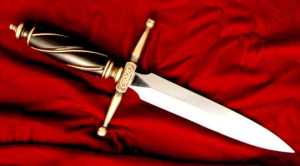
daggerWith two main maps of Rome’s mansion posted, and a third map underway, my mind is now moving from hidden doors and secret passageways to the puzzles, stereotypes, and inner workings of society. Much to my chagrin, I have been forced to map out a rough sketch of Labriella’s town, thereby adding to the growing number of maps rattling around in my head. Without at least a rough sketch of the town, it is almost impossible to determine where Rome should go next in his quest for information, or what types of people he will meet and the nature of the help he will receive.
Sexism scouts be warned: This story will have all kinds of stereotypes. It is not that I endorse stereotypes. On the contrary: I make stereotypes to break them. It is my personal understanding that, while people hate to be put in a category, because everyone wants to be thought “unique” and “original,” each person either enjoys or overlooks the advantages of having a stereotype forced onto them, to either their advantage or their downfall.

What do I mean?

I mean if you are considered a “jock,” many people may say you are good at sports and nothing else. The jock has the advantage, because people are expecting them to use brawn instead of brains. By using quick wit and intellect, the jock may overpower their unsuspecting opponent in a heartbeat, at the time of their choosing.

I mean if you are considered a “nerd,” many people may assume that your only redeeming quality is your above-average intelligence. The nerd has the advantage, because people expect them to rely on good grades and lengthy explanations full of big words to get them through life. But many nerds are deemed such because they care more for their mind than their appearance, and at the drop of a hat, if they really wanted to, they could show the outward beauty they’ve had all along and stun their opponents into shocked silence.

I mean that nobility, merchants, business owners, bartenders, common people, servants, prostitutes, doctors, and priests, heroes and villains, men and women, major and minor characters, are all expected to act a certain way, and while they may be trapped by the heavy weight of expectations others have put on them due to their station, they are also granted advantages due to their station, borne of the element of surprise and the opportunity for the unexpected.

There is the added bonus that most people label what they are afraid of. For instance, the average high schooler might be afraid of the jock’s physical strength or the nerd’s genius or the artist’s viewpoint. People are afraid of talents and abilities they believe they do not have, skills or experiences they believe will give others the upper hand and make them vulnerable. People persecute what they don’t understand, misinterpreting it as a threat.

Stereotypes are made to be broken. The story of a beauty and a beast is the epitome of that, no matter the writer or their chosen rendition. It is an inescapable contrast borne of other people’s labels induced upon that which they can and cannot understand.

And so I set about to make a society in order to break it, that it might be remade, and then broken again, and so on. Is our society not one which constantly changes? Are stereotypes and tendencies of Rome and Labriella’s world so different from the history (and in many ways, the present) world of our own? Just because we don’t like certain events in our history, doesn’t mean they didn’t happen. Just because we don’t like certain aspects of our society, doesn’t mean they don’t exist, or that we don’t have to deal with them–many times on a daily basis.

ARTIST WANTED!!!!!!!!

artwork

ARTISTS WANTED!!!!!!! Seriously, I need someone who’s really good at drawing to draw my characters. I would draw them myself, except I’m not so great at drawing people (though I am getting better).

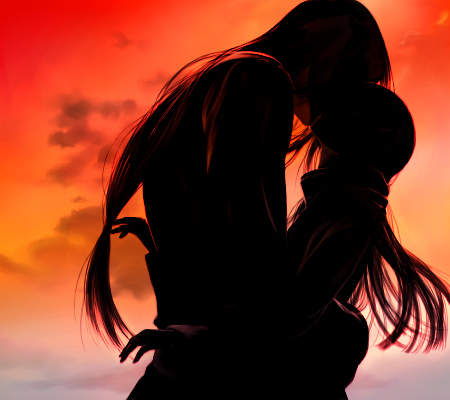
As far as drawing style, I’m thinking somewhere between anime and realistic. The picture I’ve posted here is a great example…except visible facial features would be nice! It doesn’t have to be all professional (though I wouldn’t complain if it was), just true to the story.

If you’re interested, leave a comment to this post.

In the meantime, I’ll be working on chapter 9 and the map of the downstairs portion of the house. WAFF is on its way! Smile